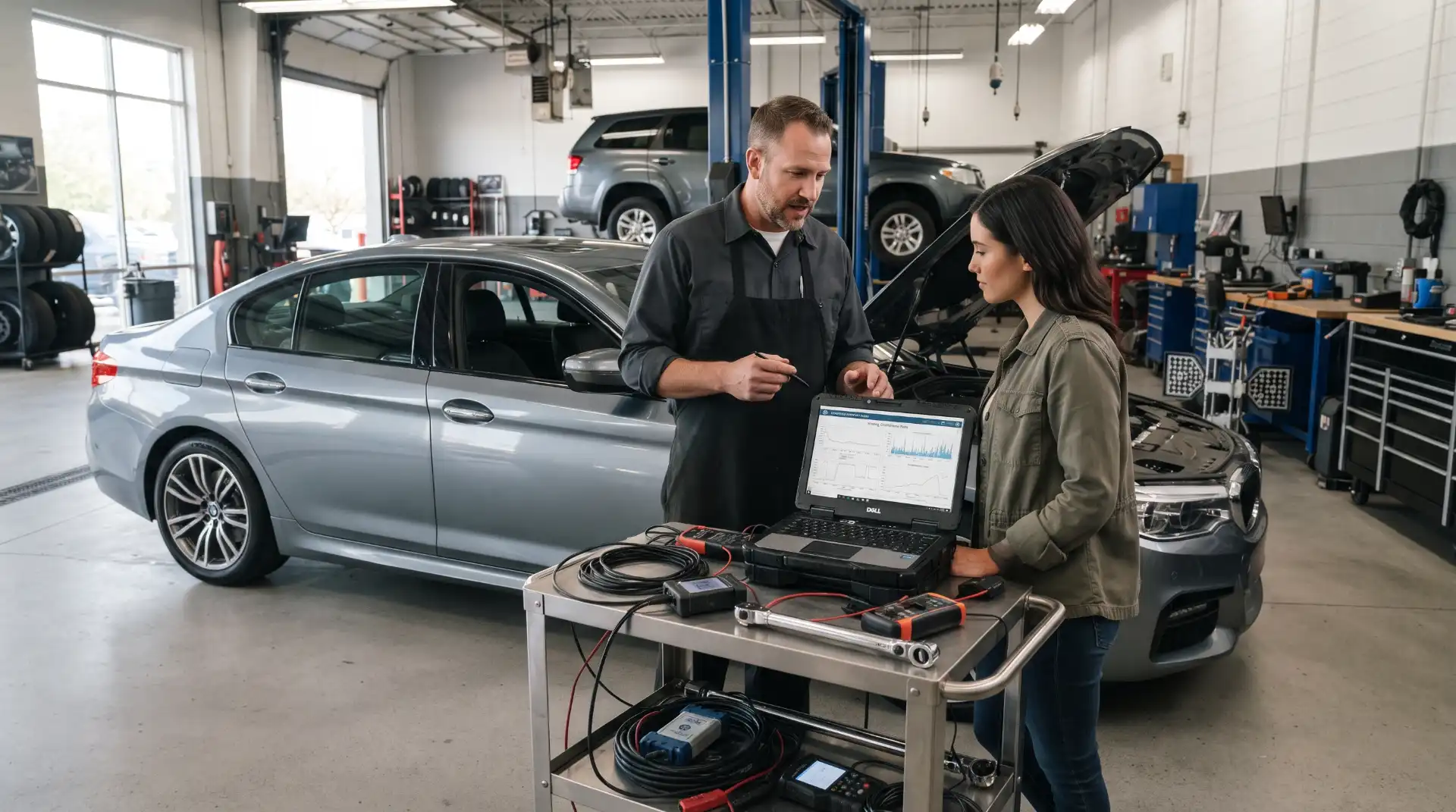

Many car enthusiasts believe the fastest way to improve a track car is by adding more horsepower. More power is exciting, and engine upgrades often receive the most attention in the automotive world. Bigger turbochargers, aggressive engine tuning, superchargers, and high-performance exhaust systems can create impressive numbers on a dyno, but horsepower alone does not guarantee faster lap times.
A truly capable track car is built around balance, consistency, and reliability. A vehicle that can complete multiple sessions at a race circuit without overheating, damaging components, or requiring constant repairs will usually provide a better experience than a high-powered car that struggles under pressure.
For drivers participating in track days, High Performance Driver Education (HPDE) events, autocross, Time Trials, or grassroots racing across the United States, reliability should be the foundation of every build. Whether the car is a Mazda Miata at a local road course, a BMW at a club racing event, a Mustang at a performance driving school, or a Corvette at a major circuit, the same principle applies: a balanced car creates confidence.
The goal of a reliable track car is not simply to produce more power. The goal is to create a machine that allows the driver to improve, learn the track, and enjoy more seat time.
 Why Reliability Matters More Than Horsepower on the Track
Street driving rarely pushes a vehicle to its limits. A car may perform perfectly during daily commuting, highway driving, or occasional spirited runs, but a racetrack creates an entirely different environment.
During a track session, the engine operates at high RPM for extended periods. Brakes experience repeated extreme temperatures. Tires generate continuous heat from cornering forces. Cooling systems work harder than they ever would during normal driving.
These conditions reveal weaknesses that may remain hidden during everyday use.
A vehicle with excessive horsepower but poor cooling, weak brakes, or inadequate tires can become difficult to drive. Instead of focusing on improving driving technique, the owner spends time managing problems.
A reliable track car allows the driver to concentrate on braking points, racing lines, corner exits, and consistency. These improvements often produce bigger gains than adding another 100 horsepower.
Many experienced drivers eventually discover that improving the connection between the car and the road creates more performance than simply increasing engine output.
Start With Maintenance Before Modifications
The first step in building a track car should not be installing aftermarket parts. It should be making sure the vehicle is mechanically prepared.
A strong foundation begins with a complete inspection and maintenance review. Track driving places additional stress on every major system, meaning existing problems can become serious failures quickly.
Fresh fluids are one of the most important starting points. Engine oil, transmission fluid, differential fluid, coolant, and brake fluid should all be inspected and replaced when necessary. Old fluids may perform adequately during normal driving but fail under repeated track conditions.
Suspension components should also be checked carefully. Worn bushings, tired shocks, loose ball joints, or damaged wheel bearings can negatively affect handling and safety.
Many drivers make the mistake of modifying a vehicle before understanding its current condition. A properly maintained stock vehicle is often a better starting point than a heavily modified car with neglected mechanical issues.
The Sports Car Club of America (SCCA) provides extensive resources for drivers preparing vehicles for track events and competitive motorsports.
Tires Are Often More Important Than Horsepower
One of the biggest lessons in performance driving is that power means very little without grip.
The tires are the only connection between the vehicle and the track surface. Improving tire quality can dramatically change how a car feels and performs.
Many beginner drivers spend thousands of dollars improving engine performance while continuing to use tires that cannot handle track conditions. A car with moderate horsepower and excellent tires can often outperform a more powerful vehicle with poor traction.
Track-focused tires improve cornering ability, braking performance, and driver confidence. However, selecting the right tire depends on the vehicle, experience level, and intended use.
Some drivers may benefit from high-performance street tires while learning vehicle control. More experienced drivers may choose dedicated track tires designed to operate at higher temperatures.
Tire management is also a major part of track preparation. Pressure changes throughout a session as tires heat up, and understanding those changes helps drivers maintain consistent performance.
A reliable track build treats tires as one of the most important performance investments.
Upgrade Brakes Before Increasing Power
A common mistake among performance enthusiasts is increasing engine power before improving stopping ability.
On a race track, acceleration is only one part of performance. A faster car must also slow down repeatedly and predictably.
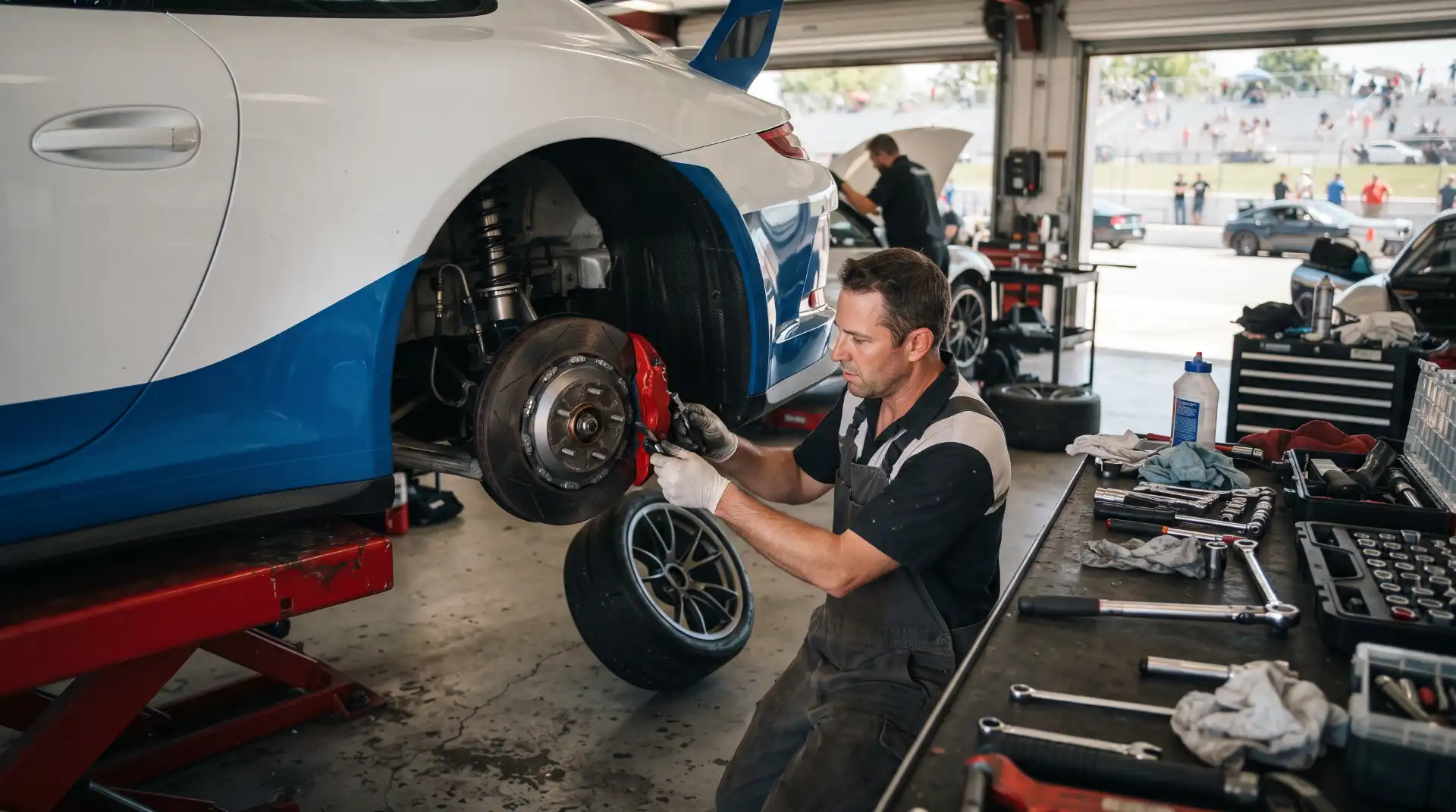
Factory brakes may work well for street driving but can experience problems during aggressive track use. Repeated braking zones generate extreme heat that can lead to brake fade, reduced stopping power, and decreased driver confidence.
A smart brake upgrade strategy focuses on improving the entire system rather than immediately purchasing expensive big brake kits.
High-quality brake pads designed for track use can significantly improve performance. Fresh high-temperature brake fluid helps reduce the chance of fluid boiling. Proper brake cooling can help manage heat during longer sessions.
The objective is not simply having the largest brakes available. The objective is creating a braking system that performs consistently throughout an entire track day.
A driver who trusts the brakes can focus on improving lap times rather than worrying about stopping performance.
Cooling Should Be a Priority in Any Track Build
Heat is one of the biggest challenges in motorsport.
A vehicle that stays cool during normal driving may struggle during extended track sessions. Long periods of high engine load create temperatures that expose weaknesses in cooling systems.
Before adding horsepower, owners should ensure their cooling system can handle the demands of track use.
Improved cooling may include upgraded radiators, better airflow management, oil coolers, transmission cooling solutions, or improved engine bay ventilation.
This is especially important for turbocharged and high-performance vehicles because additional power often creates additional heat.
A reliable track car is one that can complete an entire session without overheating or entering reduced-power modes.
More horsepower is useless if the vehicle cannot maintain performance for more than a few laps.
Suspension Upgrades Should Focus on Balance
Suspension modifications are among the most popular track upgrades, but aggressive does not always mean better.
Many enthusiasts immediately install extremely stiff suspension setups because they believe a race-inspired setup will automatically make the vehicle faster. In reality, a poorly matched suspension system can reduce grip and make the car difficult to control.
A good track suspension setup improves communication between the driver and the vehicle.
The car should feel predictable during braking, cornering, and acceleration. Drivers should understand how the vehicle responds rather than constantly fighting it.
Alignment settings are especially important. Proper camber, toe, and caster adjustments can improve cornering performance and tire wear.
The best suspension setup depends on the vehicle, track conditions, tires, and driver experience.
A professional racing setup is not always the ideal choice for a weekend track enthusiast who still drives the vehicle on public roads.
Lightweight Improvements Can Create Real Performance Gains
Reducing weight is another effective way to improve a track car without increasing horsepower.
A lighter vehicle accelerates faster, brakes more efficiently, and places less stress on tires and brakes.
However, weight reduction should be approached carefully.
Removing unnecessary items from the vehicle can help, but reliability and safety should always remain priorities. A track car still needs proper protection and equipment for the type of driving being performed.
Lightweight wheels, improved seating, and removing unused interior components can provide benefits without compromising the vehicle’s usability.
The goal is not creating the lightest possible vehicle. The goal is creating a balanced machine that performs consistently.
Driver Skill Is the Most Important Upgrade
One of the biggest advantages of building a reliable track car is that it allows the driver to improve.
A powerful vehicle can hide mistakes. A balanced vehicle teaches better technique.
Track driving requires understanding braking zones, throttle control, weight transfer, racing lines, and vehicle dynamics.
A driver who improves these skills can become significantly faster without changing the car.
Many experienced racers recommend investing in driver education before expensive modifications. HPDE programs throughout the United States provide opportunities for beginners to learn from instructors in controlled environments.
A reliable vehicle gives drivers more opportunities to practice, and more practice creates better performance.

Use Data to Improve Instead of Guessing
Modern technology has made performance analysis available to amateur drivers.
Data logging systems, GPS lap timers, onboard cameras, and telemetry tools allow drivers to understand exactly where they are gaining or losing time.
Instead of installing random modifications, drivers can identify actual weaknesses.
A driver may believe more horsepower is needed, but data may reveal that the real issue is braking too early or carrying insufficient speed through corners.
Technology helps create smarter builds because every modification can have a purpose.
Many modern racing teams use data analysis to improve performance, and amateur drivers can apply the same principles on a smaller scale.
Build a Track Car You Can Actually Maintain
A reliable track car should fit within your budget.
Track driving creates additional expenses because tires, brakes, fluids, and maintenance items wear faster than they do during street use.
Some enthusiasts create extreme builds that become too expensive to operate. Eventually, the car spends more time parked than driven.
A simpler, dependable car that attends multiple track events each year is often more rewarding.
The best track car is not necessarily the most expensive one. It is the one that allows the owner to continue improving.
Consistency creates progress.
The Best Track Cars Are Balanced Machines
Building a reliable track car is not about chasing the highest horsepower number. It is about creating a vehicle that performs well in every area.
A successful build combines dependable maintenance, quality tires, strong brakes, effective cooling, proper suspension setup, and driver development.
Power can always be added later. However, reliability and balance must come first.
A car that completes every session, teaches the driver new skills, and provides confidence on the track will always be more valuable than a powerful machine that constantly requires repairs.
For most enthusiasts, the best track car is not the one with the biggest engine or the most expensive modifications. It is the one that allows them to spend more time driving.