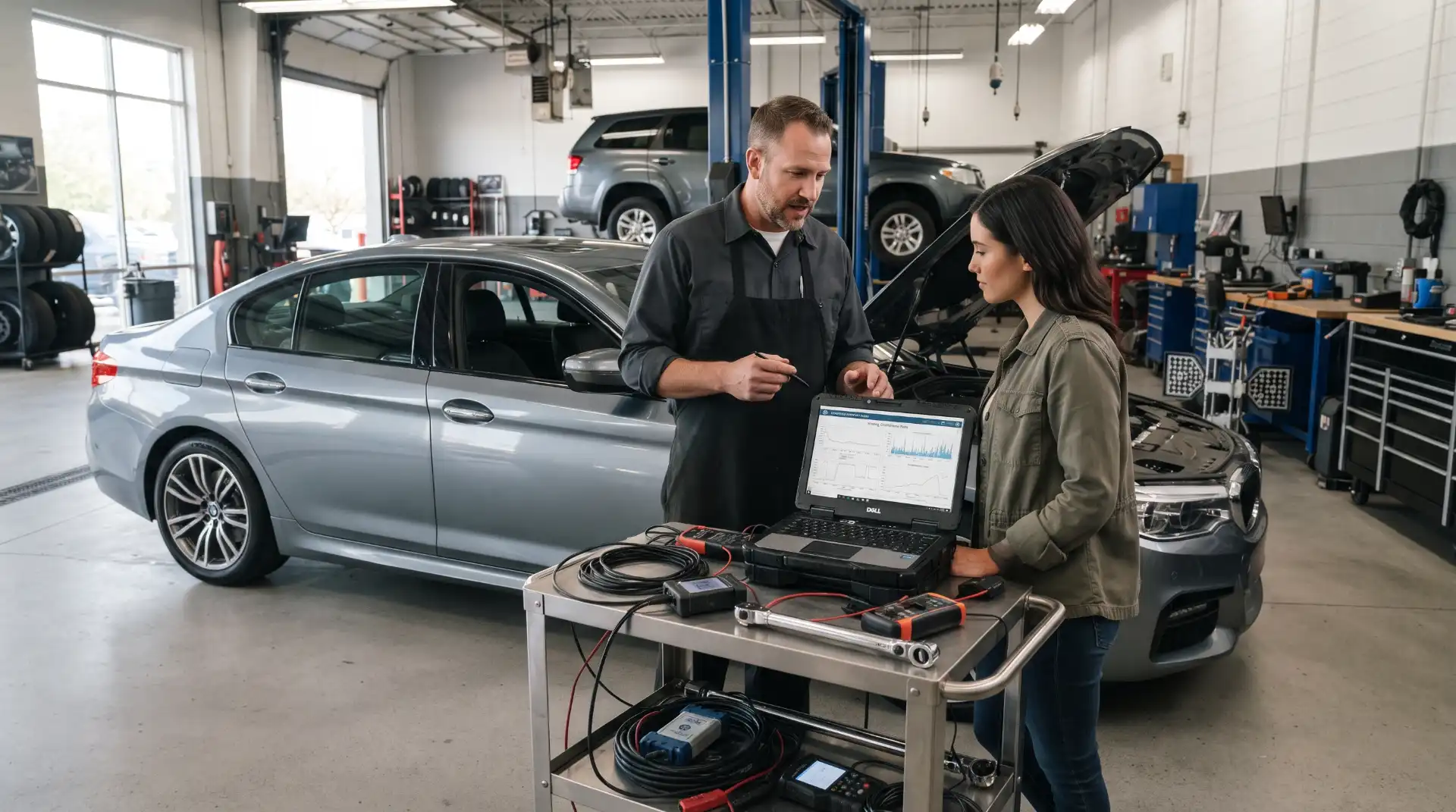
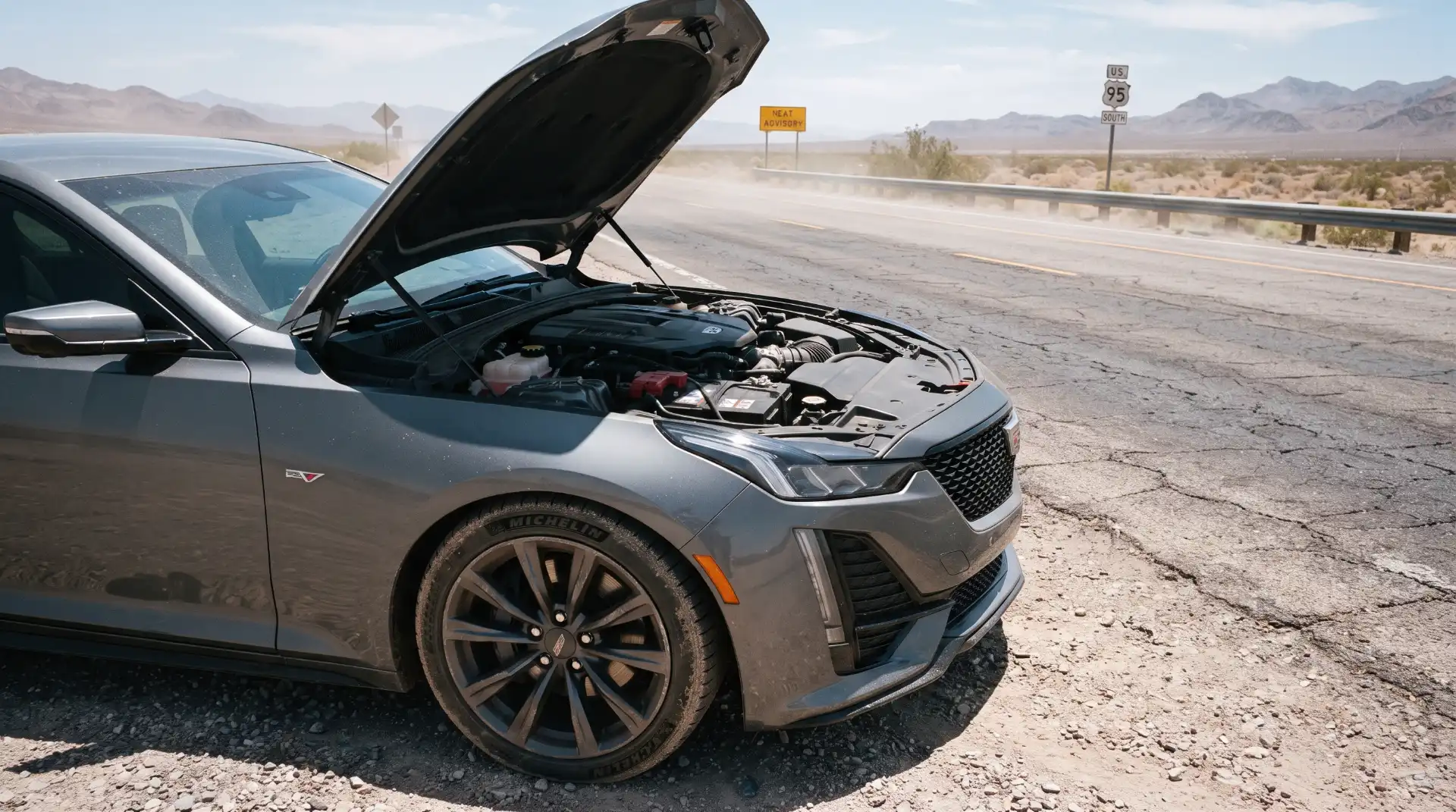
Extreme summer heat can be hard on a vehicle. Across the United States, drivers can experience everything from long periods of triple-digit temperatures in the Southwest to humid heat waves across the Southeast and Midwest. When high temperatures combine with heavy traffic, long road trips, towing, stop-and-go driving, or extended idling, important vehicle components can be pushed much harder than they are during ordinary driving.
Many drivers associate vehicle problems with winter weather, but extreme heat can create its own serious challenges. Tires, batteries, cooling systems, engine oil, coolant, belts, hoses, air-conditioning systems, and even electric vehicle batteries can all be affected by high temperatures.
For American drivers, understanding how heat affects a vehicle is more than a maintenance issue. It can help reduce the risk of a roadside breakdown, an overheated engine, a damaged tire, or an unexpected battery failure during a long summer trip.
In this guide, we explain how extreme heat affects the most important vehicle systems and what drivers can do to prepare their cars for hot-weather driving.
Why Extreme Heat Is Hard on Cars
A vehicle generates heat every time it operates. The engine creates combustion heat, brakes create friction heat, tires flex as they roll, and electrical systems produce heat while they operate. Modern cars are designed to manage these temperatures, but extreme outdoor temperatures reduce the margin available to the vehicle’s cooling and thermal-management systems.
When outside temperatures are already very high, a car begins a journey with less ability to release additional heat into the surrounding air. This becomes particularly important during stop-and-go traffic, when airflow through the radiator and other cooling components is reduced.
A long highway trip can create another set of challenges. Continuous engine operation, high speeds, heavy loads, air-conditioning use, and hot pavement can combine to place additional stress on tires, cooling systems, fluids, and other components.
That is why preventive maintenance becomes especially important before summer road trips, track days, towing trips, and other situations that put additional demands on a vehicle.
How Extreme Heat Affects Car Tires
Tires are one of the vehicle components most directly exposed to summer heat. They are constantly touching pavement, absorbing road temperatures while also generating heat through flexing and friction.
During extreme weather, the temperature of the pavement can become much higher than the surrounding air. A vehicle traveling across hot asphalt therefore exposes its tires to a combination of high ambient temperature, hot road surfaces, internal air-pressure changes, and friction.
NHTSA explains that tire temperature resistance is one of the characteristics included in the U.S. tire-rating system. Sustained high temperatures can contribute to tire deterioration and increase the risk of problems such as blowouts and tread separation.
For drivers, one of the most important precautions is checking tire pressure regularly. The correct pressure is normally found on the vehicle’s tire information label or in the owner’s manual, rather than on the maximum-pressure number molded into the tire sidewall.
Drivers should also inspect tires for cracks, cuts, bulges, uneven wear, exposed cords, or other visible damage. A tire that already has structural damage may be more vulnerable when temperatures rise and driving conditions become more demanding.

Why Tire Pressure Matters in Hot Weather
Air pressure changes with temperature. As a tire heats up during driving, its pressure can rise. That does not mean drivers should deliberately reduce tire pressure when temperatures are high.
Instead, tire pressure should normally be checked when the tires are cold and adjusted according to the manufacturer’s recommended specification.
Driving on significantly underinflated tires is especially concerning during hot weather because the tire can flex more than intended. That additional flexing creates additional heat inside the tire.
The combination of underinflation, high temperatures, heavy loads, and long-distance driving can place unnecessary stress on the tire.
For more detailed vehicle preparation information, readers can also explore How to Build a Reliable Track Car Without Chasing Horsepower, which discusses the importance of tires, cooling, brakes, and reliability for demanding driving conditions.
Hot Weather Can Accelerate Tire Wear
Extreme heat does not automatically destroy a healthy tire, but it can make existing problems more important. Aging rubber, previous damage, low tread depth, improper pressure, excessive loading, and poor alignment can all become bigger concerns during extended hot-weather driving.
Drivers should pay particular attention before long summer journeys. A tire that appears acceptable during a short trip around town may behave differently after several hours of highway driving.
This is especially important for SUVs, trucks, and vehicles carrying heavy cargo or towing trailers. Additional weight increases the demands placed on tires, and sustained highway speeds generate more heat.
Before leaving for a long trip, inspect all four tires and do not forget the spare. A spare tire that has been sitting unused for years can still age even though it has accumulated very little mileage.
How Summer Heat Affects Traditional Car Batteries
Many drivers think of winter as the biggest threat to a car battery because cold weather can make starting an engine more difficult. However, extreme heat can also cause significant battery stress.
A conventional 12-volt automotive battery depends on chemical reactions to store and deliver electrical energy. High temperatures can accelerate some of those chemical processes and contribute to deterioration inside the battery.
Heat can also contribute to the loss of battery fluid in certain battery designs, corrosion, and internal degradation. A battery that is already nearing the end of its useful life may fail unexpectedly when exposed to prolonged extreme temperatures.
AAA has specifically warned that heat can significantly shorten conventional vehicle battery life and can contribute to summer breakdowns. Drivers should therefore pay attention to slow engine cranking, warning lights, corrosion around terminals, unusual electrical behavior, or repeated starting problems.
How to Protect Your Car Battery in Summer
The most useful strategy is to have the battery tested before the hottest portion of the year if it is older or showing warning signs. A battery inspection can reveal whether voltage, charging performance, and starting capacity are within acceptable ranges.
Keeping the battery terminals clean and ensuring the battery is securely mounted can also help. Excessive vibration can damage internal battery components over time.
The charging system deserves attention as well. A healthy alternator should maintain the proper electrical system voltage while the engine is running. Electrical accessories, air conditioning, cooling fans, lights, and infotainment systems can all increase the demand on the vehicle’s electrical system.
If your vehicle struggles to start after sitting in extreme heat, do not automatically assume the battery is the only possible problem. The charging system, starter, cables, and electrical connections can also contribute to starting problems.
How Heat Affects Electric Vehicle Batteries
Electric vehicles bring another dimension to hot-weather driving because their high-voltage battery packs are central to vehicle performance, range, charging, and thermal management.
Modern EVs use sophisticated systems to manage battery temperature. Depending on the vehicle, this may include liquid cooling, heating systems, sensors, pumps, fans, and software-controlled thermal management.
Even with these systems, extreme temperatures can affect efficiency.
AAA’s 2026 temperature study tested electric and hybrid vehicles at different ambient temperatures. At 95°F, AAA found that EV efficiency decreased by 10.4% compared with testing at 75°F, while calculated driving range decreased by 8.5%.
Hot weather can increase the energy required to cool the passenger cabin, while the battery and other components may also require thermal management. The actual impact varies by vehicle, battery design, driving conditions, speed, climate-control use, and other factors.
For EV drivers, the lesson is not that hot weather makes electric vehicles impractical. Instead, it means drivers should understand that the vehicle’s range estimate is affected by real-world conditions.
Hot Weather and EV Charging
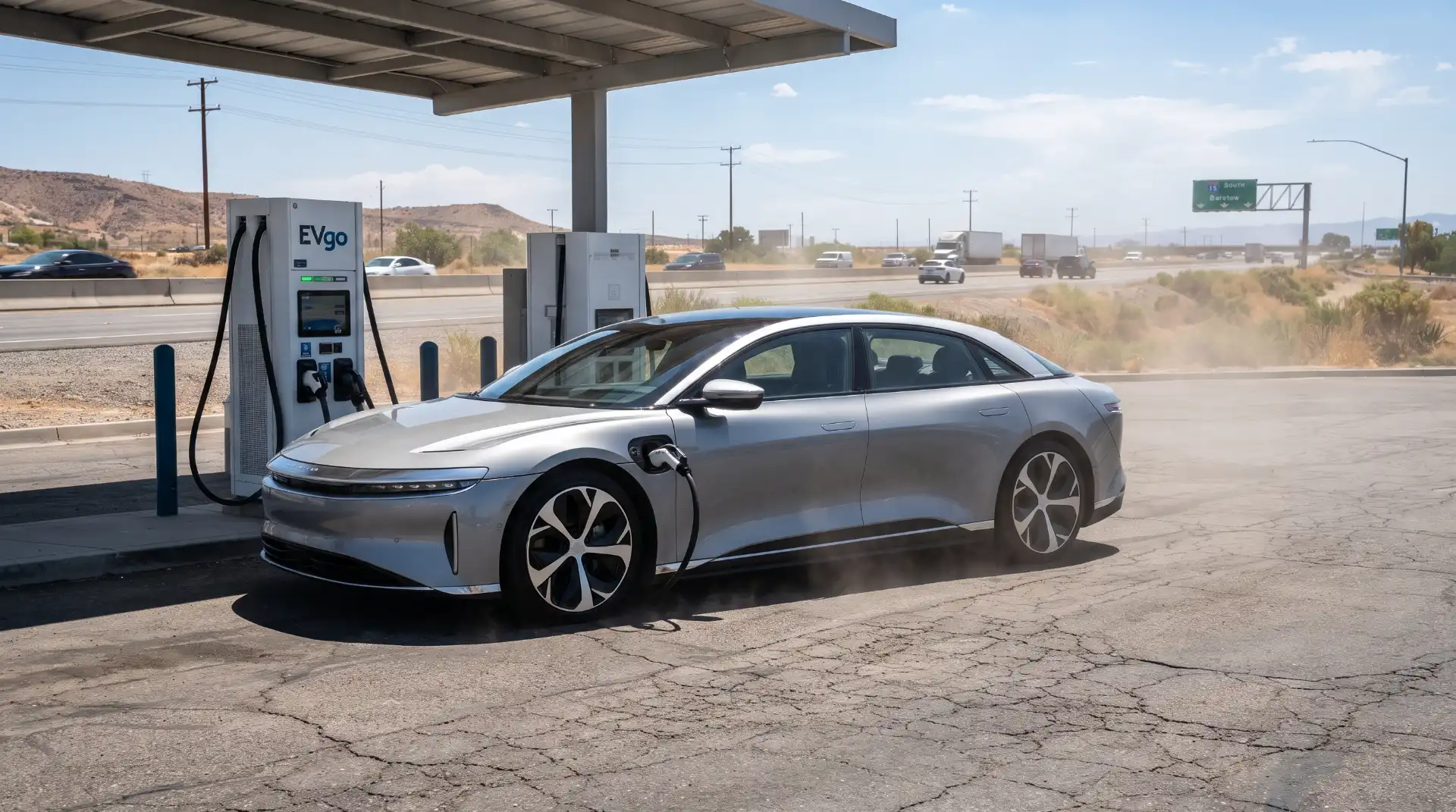
Charging behavior can also change when battery temperatures are high. Modern EVs use battery-management systems designed to protect the battery, and charging performance can be affected when thermal conditions are outside the preferred operating range.
Drivers preparing for long summer trips should plan charging stops rather than relying on the absolute maximum range shown under ideal conditions.
Using the vehicle’s navigation system to plan charging can help account for expected energy consumption. Drivers should also understand the location of charging stations along unfamiliar routes, particularly in rural areas where the next available charger may be many miles away.
Drivers interested in the growing relationship between electric vehicles and American motorsport can read The Rise of Electric Spec Racing in US Club Circuits 2025.
Engine Overheating Is a Major Summer Concern
For gasoline and diesel vehicles, extreme heat places additional demands on the engine cooling system.
The cooling system is responsible for moving heat away from the engine. Depending on the vehicle, the system can include coolant, a radiator, thermostat, water pump, cooling fans, hoses, and other components.
When everything is functioning properly, the system keeps engine temperatures within an appropriate operating range. But worn components, low coolant, leaks, restricted airflow, damaged radiators, failing fans, or thermostat problems can make overheating more likely.
Extreme outdoor temperatures can expose a weakness that might not be noticeable during cooler weather.
This is one reason overheating problems can become particularly frustrating during summer traffic. A vehicle sitting in slow-moving traffic may have less natural airflow through the radiator while the engine continues generating heat and the air-conditioning system adds another demand.
Warning Signs of an Overheating Engine
Modern vehicles provide several warning signs that the engine may be getting too hot. Depending on the vehicle, these can include a high temperature gauge reading, an illuminated temperature warning light, reduced engine performance, unusual smells, visible coolant leaks, or steam coming from beneath the hood.
Drivers should never ignore an overheating warning.
Continuing to drive an overheating vehicle can cause severe engine damage. Depending on the severity of the problem, excessive heat can damage gaskets, cylinder heads, cooling-system components, and other engine parts.
If a vehicle begins overheating, move to a safe location as soon as possible. Turn on hazard lights and follow the vehicle manufacturer’s emergency instructions.
Do not immediately open a hot radiator or coolant reservoir if the system is pressurized. Hot coolant can cause serious burns.
AAA recommends getting safely off the road and allowing an overheated vehicle to cool rather than continuing to drive while temperatures remain dangerously high.
Coolant Is Essential During a Heat Wave
Coolant is more than something that needs to be topped off occasionally. The cooling system needs the correct fluid, concentration, circulation, and pressure to function properly.
Drivers should check their vehicle’s recommended coolant type and service interval rather than mixing products at random.
A low coolant level may indicate a leak. Coolant can escape through hoses, radiator connections, water pumps, expansion tanks, or other components.
If you repeatedly need to add coolant, the correct solution is to identify and repair the underlying problem rather than simply adding more coolant.
Before a major summer road trip, inspect the engine compartment for signs of leaks or damaged hoses. Cracked or weakened rubber components are particularly important because high temperatures can make existing deterioration more noticeable.
Engine Oil and Extreme Heat
Engine oil performs several important functions. It lubricates moving components, helps remove heat, reduces friction, and protects internal surfaces.
When the engine is under heavy load, maintaining the correct oil level and specification becomes particularly important.
Drivers should follow the manufacturer’s recommended oil viscosity and service interval. A long highway trip in extreme heat is not the ideal time to discover that an engine is overdue for maintenance.
Oil consumption should also be monitored. A vehicle that is losing oil between services may have an underlying leak or mechanical issue that requires attention.
Heat Can Affect Belts, Hoses, and Fluids
Tires and batteries receive much of the attention during summer maintenance, but other rubber and fluid components deserve consideration.
Belts and hoses can deteriorate with age and exposure to heat. Cracks, fraying, swelling, softness, or other visible damage should be inspected by a qualified technician.
Brake fluid, transmission fluid, power-steering fluid where applicable, and other fluids also operate in a hot environment. Correct fluid levels and service intervals are important for reliable operation.
Extreme heat does not mean every fluid needs to be changed more frequently than the manufacturer recommends. Instead, drivers should follow the vehicle’s maintenance schedule and pay attention to severe-service recommendations when applicable.
Air Conditioning Makes the Vehicle Work Harder
Air conditioning is essential for comfort and safety during many U.S. summer drives, but it also adds load to the vehicle.
In a gasoline-powered car, the air-conditioning compressor is driven by the engine or an engine-connected system. In an EV, the air-conditioning system uses electrical energy from the high-voltage system.
That means sustained air-conditioning use can affect energy consumption, especially during very hot weather.
AAA’s 2026 research found that high temperatures reduce efficiency for both EVs and hybrids, with air conditioning and thermal management contributing to increased energy demand.
For longer trips, drivers can reduce unnecessary energy use by parking in shade when available, using sunshades, allowing the cabin to cool before leaving when practical, and maintaining an appropriate temperature rather than repeatedly cycling the climate system at maximum settings.
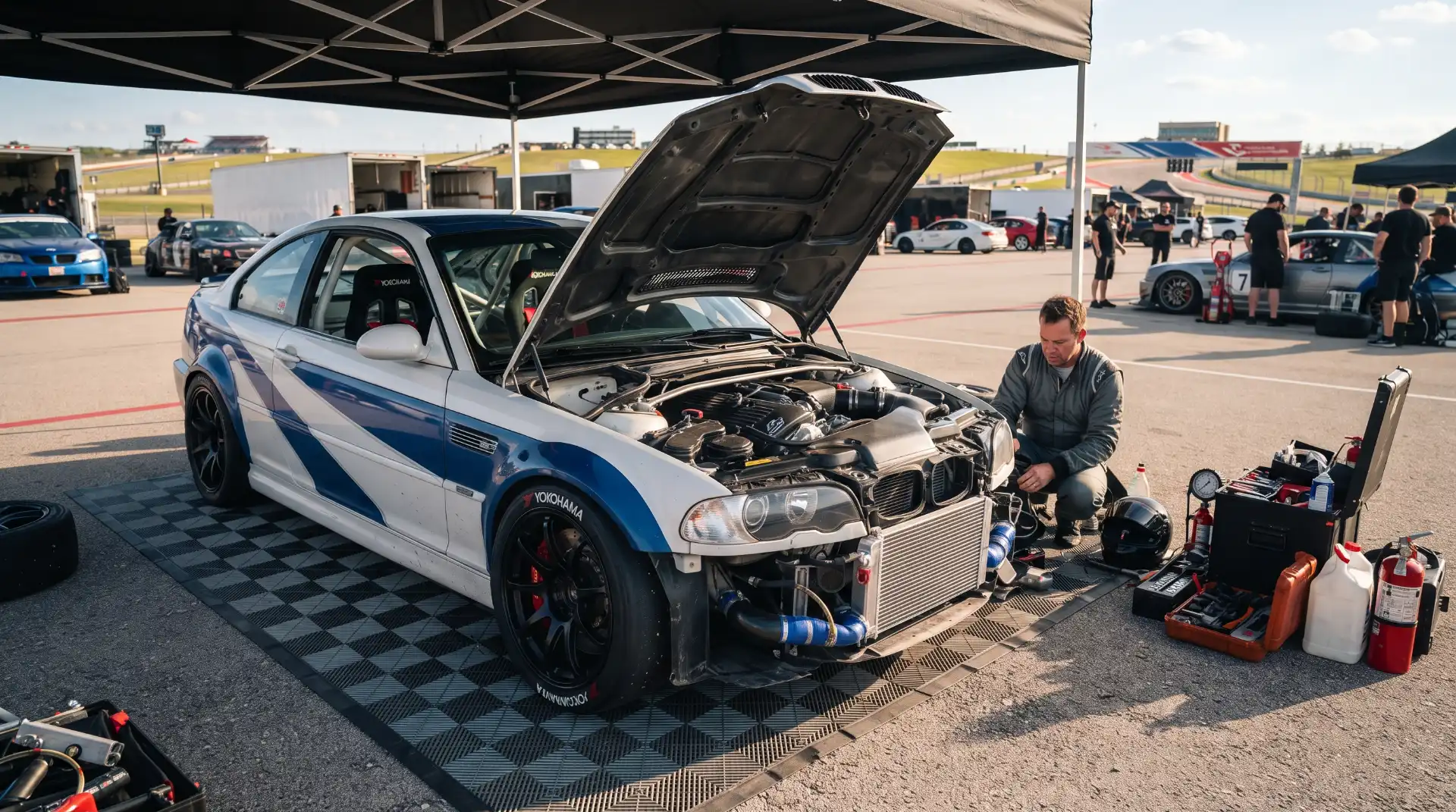
Hot Weather Is Especially Important for Track-Day Drivers
Heat becomes an even bigger concern when driving on a racetrack.
A track session can keep the engine at high RPM for extended periods. Brakes repeatedly convert kinetic energy into heat. Tires experience high cornering forces. Transmission and differential components may operate under loads that are rarely encountered during normal street driving.
A vehicle that performs perfectly during a highway commute may therefore need additional preparation before track use.
Cooling capability, brake condition, tire condition, fluid condition, and driver awareness all become important.
This is closely connected to the philosophy discussed in How to Build a Reliable Track Car Without Chasing Horsepower. A dependable vehicle that can complete multiple sessions consistently can be far more useful than a high-powered car that struggles with heat.
Preparing Your Car for a U.S. Summer Road Trip
Summer road trips are one of the best ways to experience the United States, but long-distance driving also puts additional miles and hours on a vehicle in a short period of time.
Before leaving, check the tire pressures when the tires are cold and inspect the tread and sidewalls. Make sure the spare tire or tire-repair system is ready for use.
Check engine oil, coolant, windshield washer fluid, and other fluids according to the vehicle manufacturer’s instructions. Look for obvious leaks and inspect belts and hoses if they are accessible.
Pay attention to the battery and starting performance. If the vehicle has shown signs of a weak battery, have it tested before the trip rather than waiting for a failure at a rest area or gas station.
Drivers should also check their cooling system if they are preparing for travel through areas known for extreme summer temperatures, such as parts of Arizona, Nevada, Texas, California, New Mexico, or the Southeast.
What to Do If Your Vehicle Overheats
An overheating vehicle is a roadside safety problem as well as a mechanical problem.
If you see the temperature warning light, notice the gauge moving into the danger zone, smell coolant, or see steam, reduce the engine load and move to a safe location as soon as traffic conditions allow.
Turn on your hazard lights after stopping. Stay aware of surrounding traffic, particularly on high-speed highways and interstates.
Do not attempt to continue driving for a long distance simply because the vehicle still appears capable of moving. Severe engine damage can occur when an overheating problem is ignored.
If you see steam, do not immediately open the radiator cap. Pressurized cooling systems can contain extremely hot fluid.
Once safely stopped, contact roadside assistance or a qualified towing service when necessary. AAA notes that extreme summer weather can increase roadside assistance demand, so breakdown response times may also become longer during major heat events.

Extreme Heat and Older Cars
Older vehicles can face additional challenges because rubber components, seals, electrical connections, batteries, cooling systems, and other parts naturally age.
A well-maintained older vehicle can still perform reliably in hot weather, but age makes preventative inspection more important.
Owners of classic cars and enthusiast vehicles should pay particular attention to cooling capacity, electrical systems, tires, fuel systems, and replacement parts.
Vehicles that have been modified also deserve special attention. Performance modifications can increase engine output and therefore increase heat generation. Changes to engine tuning, forced induction, exhaust systems, cooling systems, or electrical components should be considered as part of the entire vehicle system rather than isolated upgrades.
Simple Habits That Can Reduce Summer Problems
Good summer vehicle care does not require complicated modifications. In many cases, the most useful improvements are basic maintenance habits.
Check tire pressure regularly. Inspect tires before long trips. Pay attention to battery warning signs. Keep cooling-system maintenance current. Watch the engine temperature gauge. Investigate coolant or oil leaks promptly. Follow the manufacturer’s maintenance schedule.
It is also smart to avoid unnecessary stress on a vehicle during the worst heat of the day when practical. Heavy towing, extended idling, and demanding driving can place additional loads on components that are already working in extreme temperatures.
Extreme Heat and Hybrid Vehicles
Hybrid vehicles combine an internal combustion engine with an electric drive system, so they have characteristics of both traditional vehicles and EVs.
High temperatures can affect fuel economy, air-conditioning energy use, battery thermal management, and engine operation.
AAA’s 2026 research found that hybrid vehicles experienced a 12% decrease in fuel efficiency at 95°F compared with 75°F testing conditions.
The exact effect varies between vehicles, but the finding demonstrates why drivers should not expect laboratory or ideal-weather fuel-economy figures under every summer condition.
For hybrid owners, keeping tires properly inflated, maintaining the cooling system, minimizing unnecessary weight, and using efficient driving habits can help reduce additional energy demand.
Why Heat Preparation Matters More in the United States
The United States has an enormous range of climates and driving environments. A driver in Phoenix can experience extremely high desert temperatures, while a driver in Florida may deal with intense heat combined with humidity. Texas, Nevada, Arizona, California, New Mexico, Oklahoma, Louisiana, Georgia, and many other states can experience periods of significant summer heat.
American drivers also commonly travel long distances by car. Interstate road trips can mean several hours of continuous driving, frequently at highway speeds.
That combination makes preventative maintenance particularly valuable.
Drivers should not wait until a heat wave arrives to discover that their tires are worn, their battery is weak, or their cooling system has a leak.
Final Thoughts on Extreme Heat Car Care
Extreme heat can challenge nearly every major system in a vehicle. Tires must deal with hot pavement and internal temperature changes. Conventional batteries can deteriorate faster when exposed to prolonged heat. EVs and hybrids use sophisticated thermal-management systems but can still experience efficiency losses during hot weather. Engines and cooling systems must continuously remove excess heat while operating in demanding conditions.
The good news is that much of the risk can be reduced with basic preparation.
Start with the components most directly related to safety and reliability: tires, brakes, fluids, batteries, and cooling systems. Follow your vehicle manufacturer’s maintenance recommendations and address warning signs before they become breakdowns.
For performance enthusiasts, heat management becomes even more important. Track driving places substantially greater demands on tires, engines, brakes, transmissions, batteries, and cooling systems. Building a reliable car and developing good driving habits can make track days safer and more enjoyable.
Modern cars are becoming increasingly sophisticated, but the fundamentals of vehicle care remain important. Whether you drive a gasoline-powered sedan, a pickup truck, a hybrid SUV, an EV, or a performance car, extreme heat is a reason to pay closer attention to maintenance.
Taking a little time to prepare your vehicle before a major summer journey can help prevent an avoidable breakdown when temperatures are at their highest.
Authoritative Resources for U.S. Drivers
For official tire safety information, visit the National Highway Traffic Safety Administration (NHTSA) Tire Safety resource.
For current information about how temperature affects EV and hybrid performance, see the AAA 2026 study on temperature impacts on EV and hybrid efficiency.
For additional hot-weather vehicle safety guidance, see AAA’s extreme heat vehicle maintenance and safety guidance.