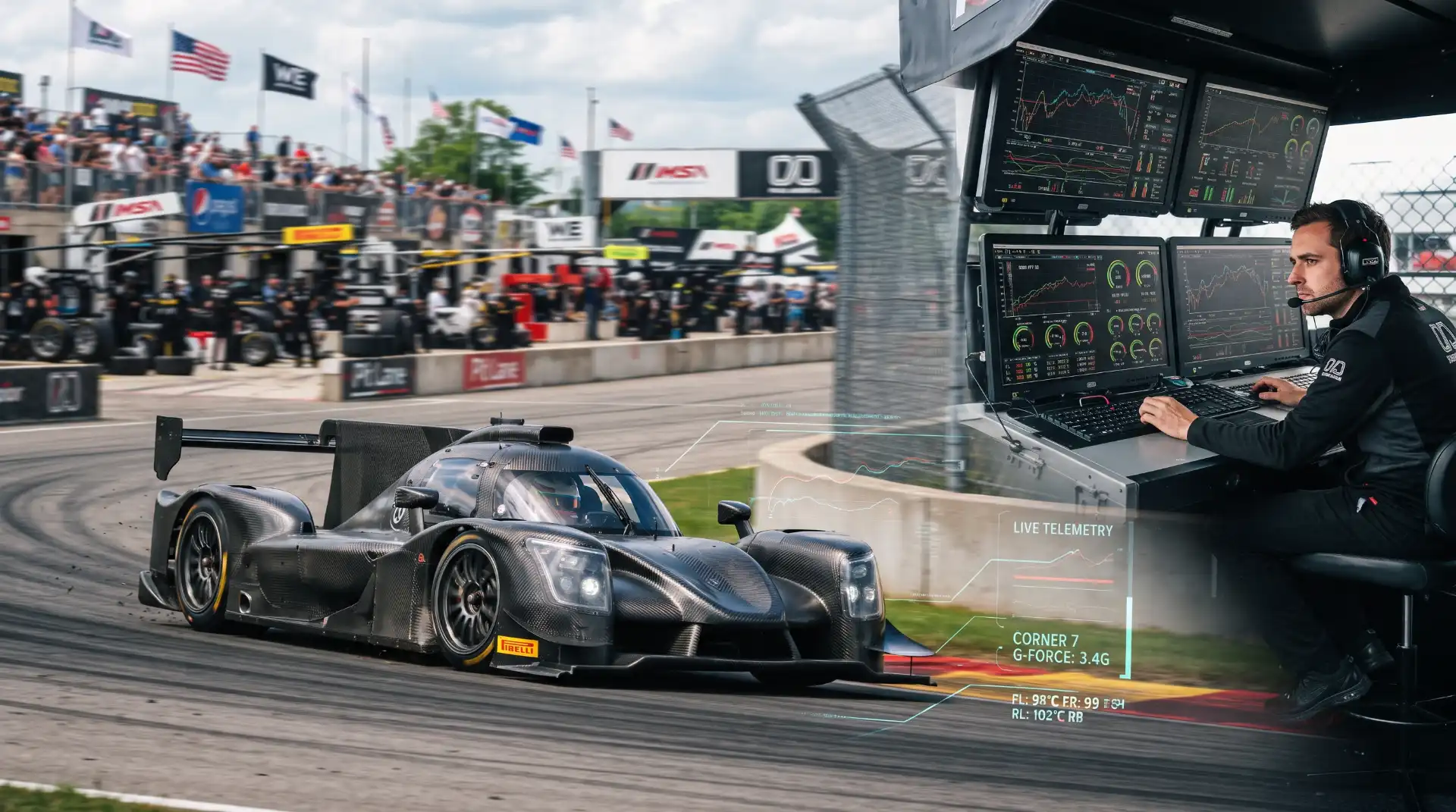
Motorsport training is changing fast. Drivers no longer need to wait for their next track day to improve. In 2026, AI sim racing coaching is giving club drivers, beginners, and serious enthusiasts a new way to build speed, consistency, and confidence between real sessions on track.
That shift matters because track time is expensive. Tyres, fuel, brake wear, travel, entry fees, and vehicle prep all add up quickly. For many drivers, that cost limits how often they can practice. Sim racing has always helped solve part of that problem, but AI coaching is pushing it much further. Instead of simply turning laps in a virtual car, drivers can now get targeted feedback on braking points, throttle application, steering input, racing line, and corner-by-corner mistakes.
For a site like Carshalton MCC, this topic makes sense. Your current blog already covers track day training, improving lap times, motorsport categories, and the value of structured practice. AI coaching sits right in the middle of that conversation. It is not replacing real driving. It is helping drivers arrive better prepared, more informed, and more efficient with the track time they already have.
Why AI Sim Racing Coaching Is Becoming a Major Motorsport Training Trend
Sim racing used to be seen as a side activity. Some drivers treated it as fun. Others treated it as a rough practice tool. That view has changed. Better physics, stronger hardware, and more realistic force feedback made sims more useful. Now AI is making them more actionable.
Why the trend is growing so quickly
The big attraction is simple. Drivers want faster improvement without wasting laps. AI sim racing coaching helps by turning practice into something more structured. Instead of guessing why a lap felt slow, a driver can review what happened and get direct feedback.
Real-time data feedback is getting more useful
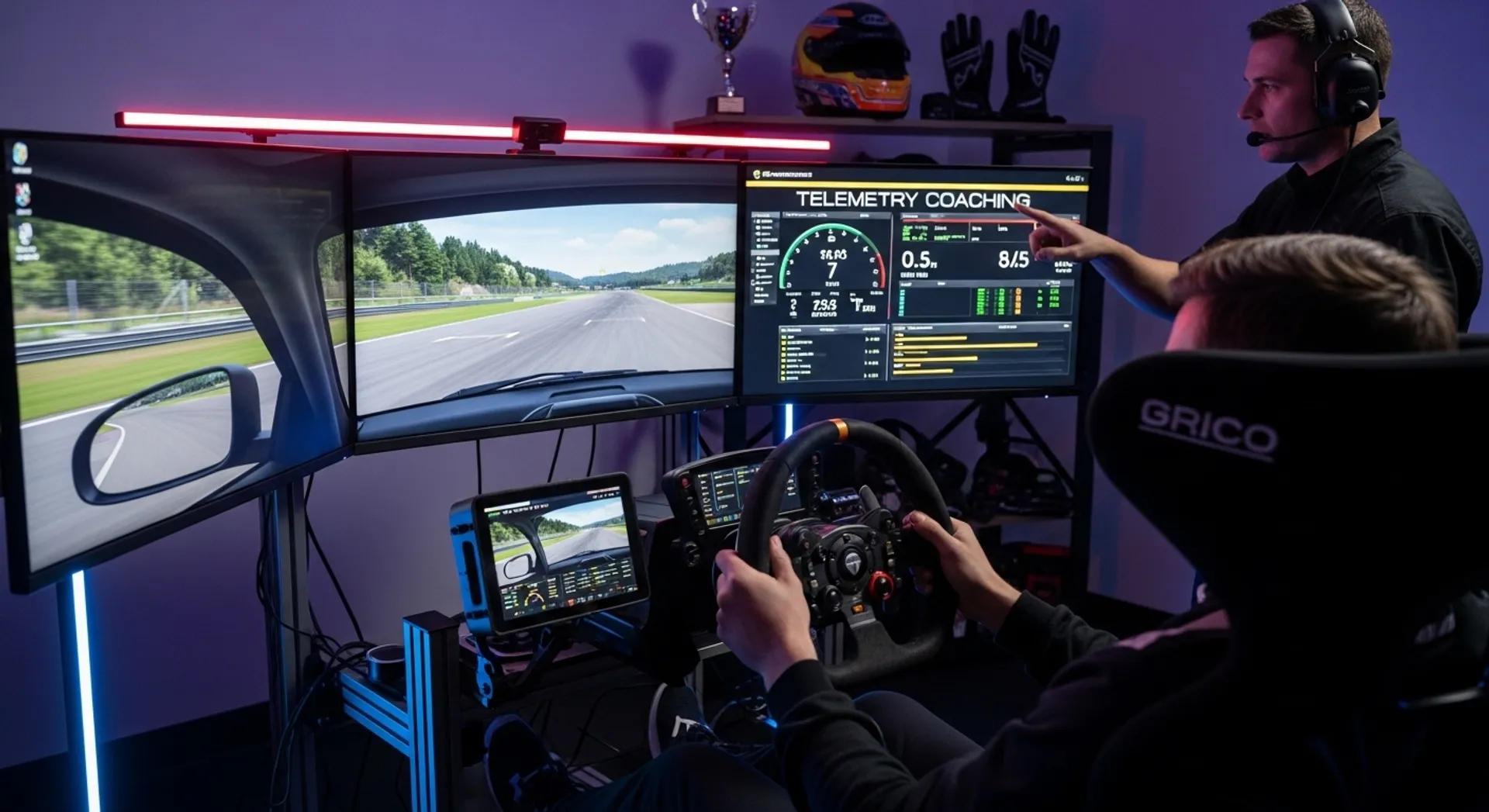
One major advantage of AI coaching is speed. A driver can finish a session and get immediate analysis. The system can flag early turn-in, missed apexes, poor brake release, weak exits, and throttle hesitation. That type of feedback used to require a coach, a data engineer, or a very experienced mentor. Now more of it is becoming available at home.
This does not mean AI replaces instructors. It means drivers can show up to coaching sessions with fewer blind spots. They already know where they struggle. They already have data. They already understand which corners need work. That makes real-world instruction more productive.
It offers lower-cost practice between track days
Track days remain the gold standard for learning real vehicle dynamics, heat cycles, braking feel, and risk management. However, most people cannot drive a circuit every week. AI sim racing coaching fills that gap. It lets drivers rehearse lines, improve rhythm, and sharpen decision-making without wearing out their car.
That cost advantage matters most for developing drivers. A newcomer can spend many more hours practicing race craft, awareness, and consistency in the simulator than they could afford in a real car. For more experienced drivers, the sim becomes a tool for keeping skills sharp between events.
This training-first mindset fits perfectly with your existing content, especially Track Day Training: Sharpen Your Skills with Carshalton MCC and The Importance of Training for Motorsport Success: Cars Halton MCC’s Approach.
Where sim coaching helps real drivers the most
Not every skill transfers perfectly from a simulator to a circuit. You still need real seat time to manage tyre temperature, weight transfer feel, mechanical grip changes, and the physical stress of being in the car. Even so, sim coaching helps in several areas that matter to nearly every driver.
First, it improves consistency. Many amateur drivers set one decent lap, then struggle to repeat it. AI tools often reveal why. Maybe the driver brakes too hard one lap and too softly the next. Maybe the turn-in point moves around. Maybe throttle pick-up changes corner to corner. Fixing those patterns can lower lap times more reliably than chasing one hero lap.
Second, it improves awareness. The best laps usually come from drivers who plan ahead. AI coaching can highlight where one corner hurts the next sector, where a late apex works better, or where sacrificing entry speed produces a stronger exit. That thinking also links naturally to your article Tips to Improve Your Lap Time: Techniques Backed by Experts.
Third, it helps drivers learn circuits more efficiently. Before a real event, a driver can study references, rehearse braking points, and build a mental picture of the lap. That saves time when they arrive at the venue. Instead of spending the whole first session learning where the track goes, they can focus on speed, balance, and refinement.
For newer readers still exploring where they fit in the sport, this topic also connects well with Understanding Motorsport Categories: A Beginner’s Guide from Cars Halton MCC.
How Drivers Should Use AI Sim Racing Coaching the Right Way
AI coaching is useful, but only when drivers use it properly. The biggest mistake is treating it like a magic shortcut. It is not. It is a training tool. The value comes from how you apply the feedback.
The best results usually come from drivers who combine simulator work with clear goals. That could mean improving braking consistency, learning a new circuit, fixing understeer habits, or preparing for a track day. Without a goal, even smart tools turn into noise.
Building a smarter training plan with sim and track work
The strongest approach is blended training. Use the sim for repetition and analysis. Use the track for feel, real-world adaptation, and pressure. Together, they create a much better development loop than either one alone.
Combine sim sessions with track notes and video review
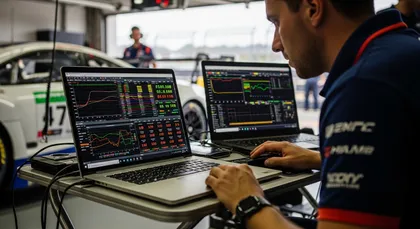
A practical method is to keep a simple driver notebook. After each sim session, note where you lost time, what the AI flagged, and what changes helped. Then compare that with real-world track notes after your next event. Over time, patterns start to emerge.
May notice that the same corner always causes trouble. Discover that you brake too aggressively when chasing lap time. You may find that a cleaner exit matters more than a brave entry. These are exactly the kinds of habits that structured training should expose.
Video review helps as well. Watch your onboard footage from both sim and real sessions. Compare what you think you did with what actually happened. AI can highlight the issue, but visual review helps lock the lesson in.
Use AI to fix consistency before chasing outright pace
Many drivers make the same mistake. They want speed first. That usually leads to overdriving, missed braking points, sloppy exits, and frustration. AI sim racing coaching works better when you start with repeatability.
If you can run five clean laps within a tight window, pace becomes easier to build. Consistency gives you a stable base. Once the technique stops changing every lap, the coaching advice becomes clearer and more useful. Then you can work on deeper braking, better rotation, and earlier throttle with much less guesswork.
This is also where AI can support track-day preparation. A driver who arrives with stable habits is easier to coach in person. They adapt faster. They make fewer panic corrections. They spend more of the day improving and less of it resetting after mistakes. That is why AI sim racing coaching is becoming part of the wider driver-development conversation rather than just a sim racing trend.
It also fits with the broader Carshalton MCC message around skill-building and preparation. Articles like What Makes Cars Halston MCC the Go-To Spot for Track Days? already position track days as learning opportunities, not just thrill rides. AI coaching adds another layer to that approach.
Drivers should still stay realistic. Simulator feedback is only as good as the setup, the software, and the discipline of the user. A poor seating position, weak pedals, unrealistic habits, or casual practice can reduce the benefit. Real-world coaching still matters. Physical fitness still matters. Mechanical sympathy still matters. A sim cannot fully teach the sensation of a car moving under heavy load, nor can it recreate every consequence of a real mistake.
Even so, the direction is clear. AI is making motorsport training more accessible, more repeatable, and more data-driven. For club drivers and track-day enthusiasts, that is a big deal. It means better use of time, better preparation, and a clearer path from enthusiasm to measurable progress.
For readers who want an outside reference point, the Motorsport UK Esports hub is a strong authority source for how sim racing is being positioned within the wider motorsport pathway.
The bottom line is simple. AI sim racing coaching is not replacing real-world driver training. It is making it smarter. Drivers still need seat time, discipline, and instruction. But in 2026, they also have better tools than ever to arrive prepared, fix mistakes faster, and make every real lap count.